WCAG Regulations
Web Content Accessibility Guidelines
WCAG (Web Content Accessibility Guidelines) are international guidelines created by the World Wide Web Consortium (W3C) to ensure that digital content is accessible to everyone.
WCAG Regulations
WCAG (Web Content Accessibility Guidelines) are international guidelines created by the World Wide Web Consortium (W3C) to ensure that digital content is accessible to everyone.
How?
Content must be presented in a way that everyone can perceive it, with alternatives like text for images or captions.
The web must be functional with keyboard, mouse, or assistive technologies, avoiding barriers like strict time constraints.
Information must be clear and easy to understand, with consistent instructions and errors that are easy to correct.
Content must work with various technologies, including assistive tools, and remain accessible over time.
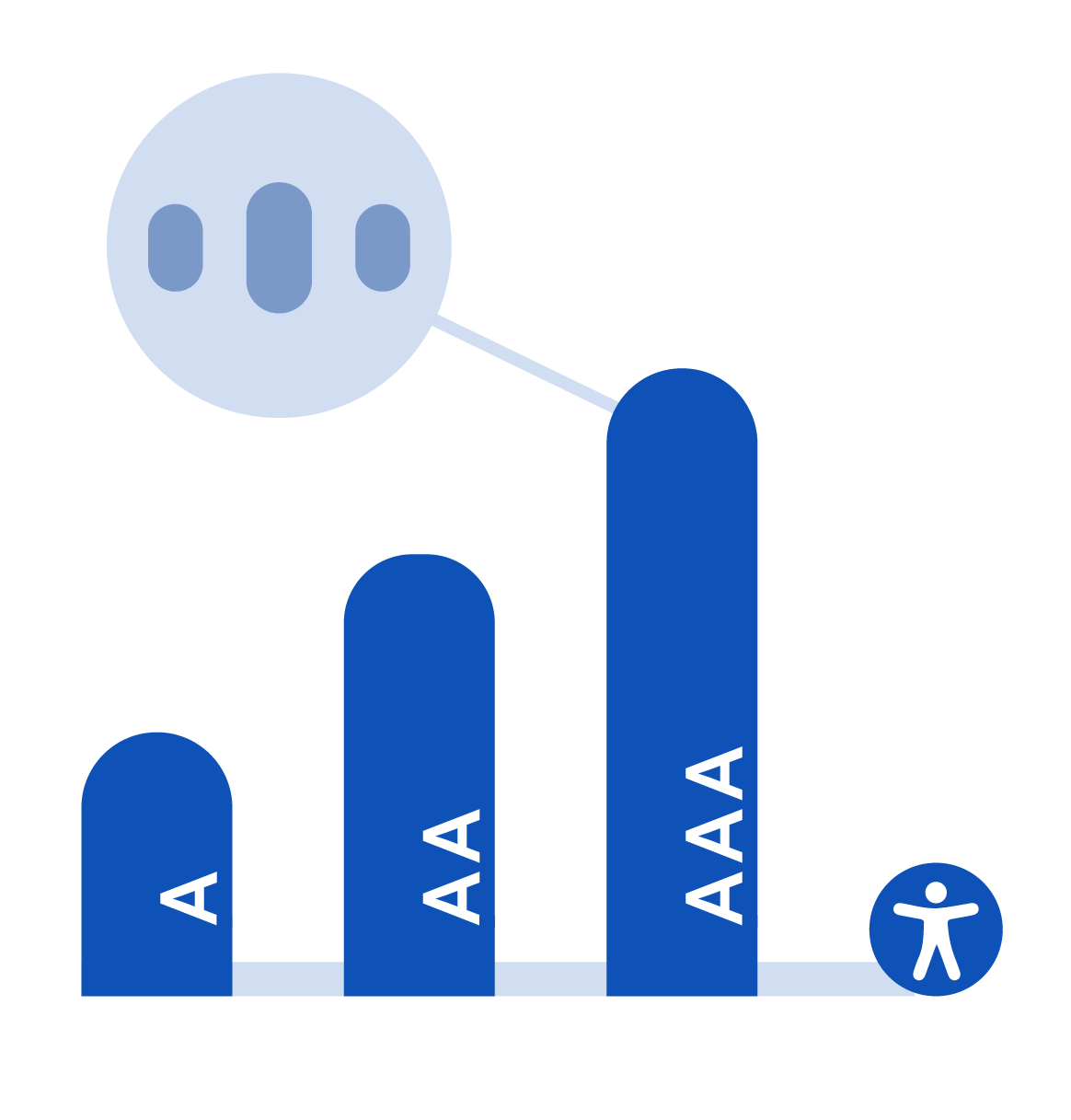
Meets the most basic accessibility requirements. Its absence may prevent many users from accessing the content.
The recommended level and required by many legal regulations. It ensures a reasonable level of accessibility for most users.
The highest level of accessibility. It is desirable but not mandatory, as it may be difficult to implement for all contexts.
Regulations
WCAG forms the basis of many laws and regulations around the world. Some of the most important include:
In the U.S., businesses and public entities are required to comply with guidelines to avoid discrimination.
European regulation requiring accessibility in digital products and services starting in 2025.
European technical standard based on WCAG for information and communication technologies.
Join the accessibility revolution and contribute to a more inclusive society with Viewser.